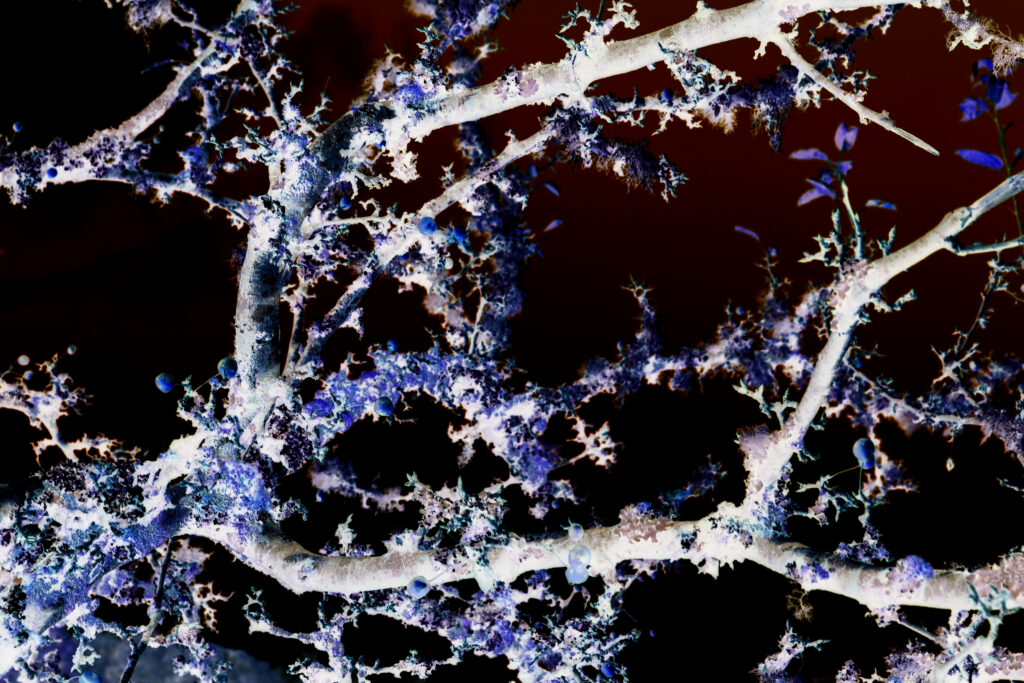
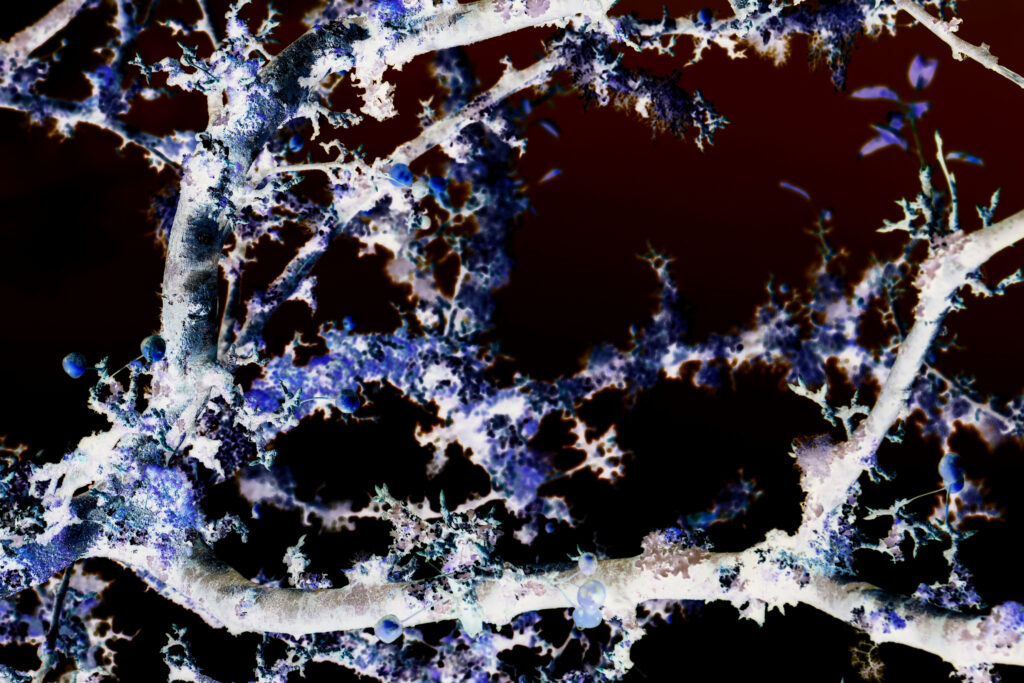
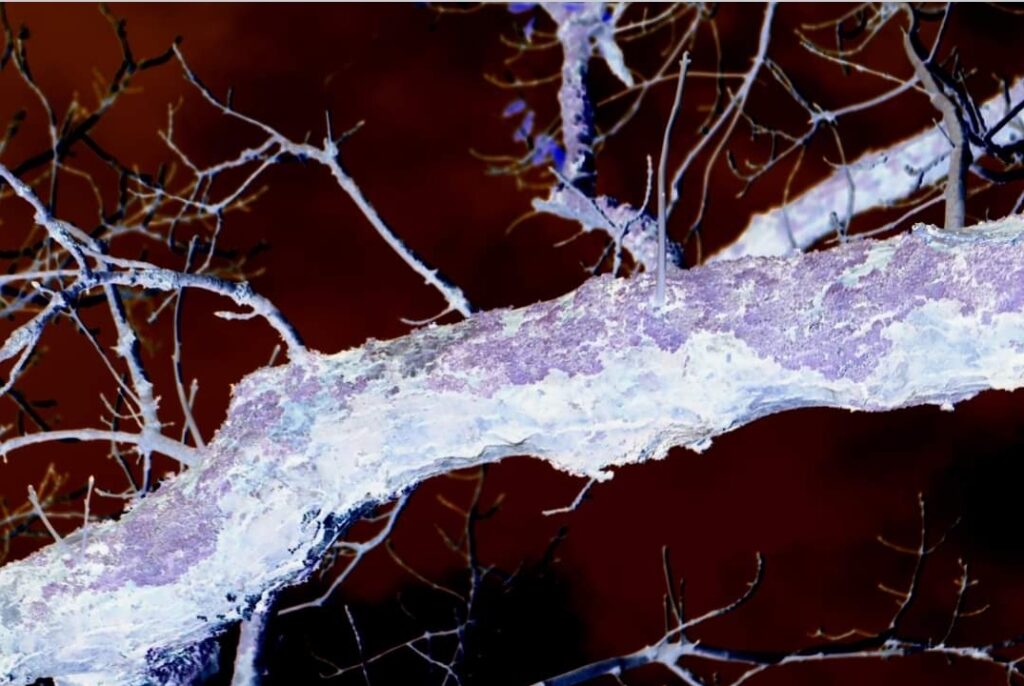
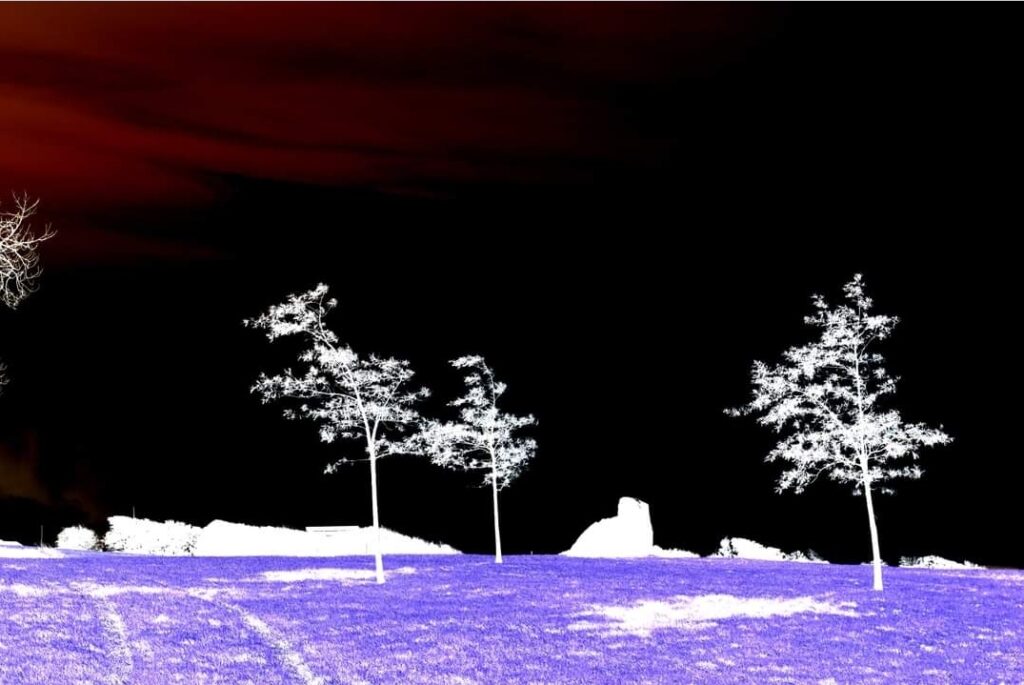
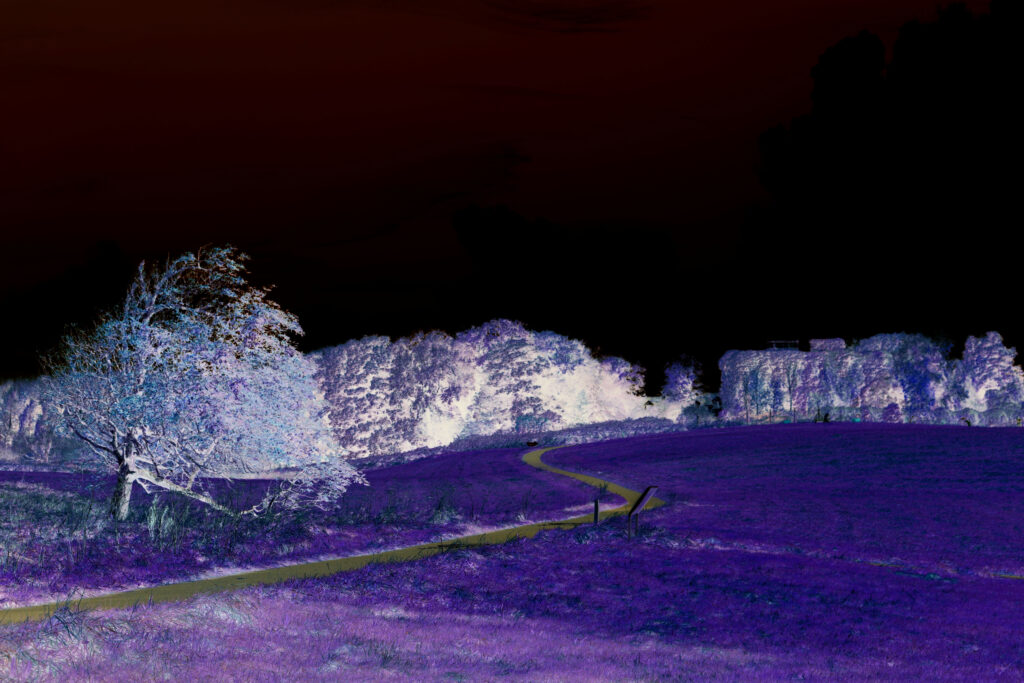
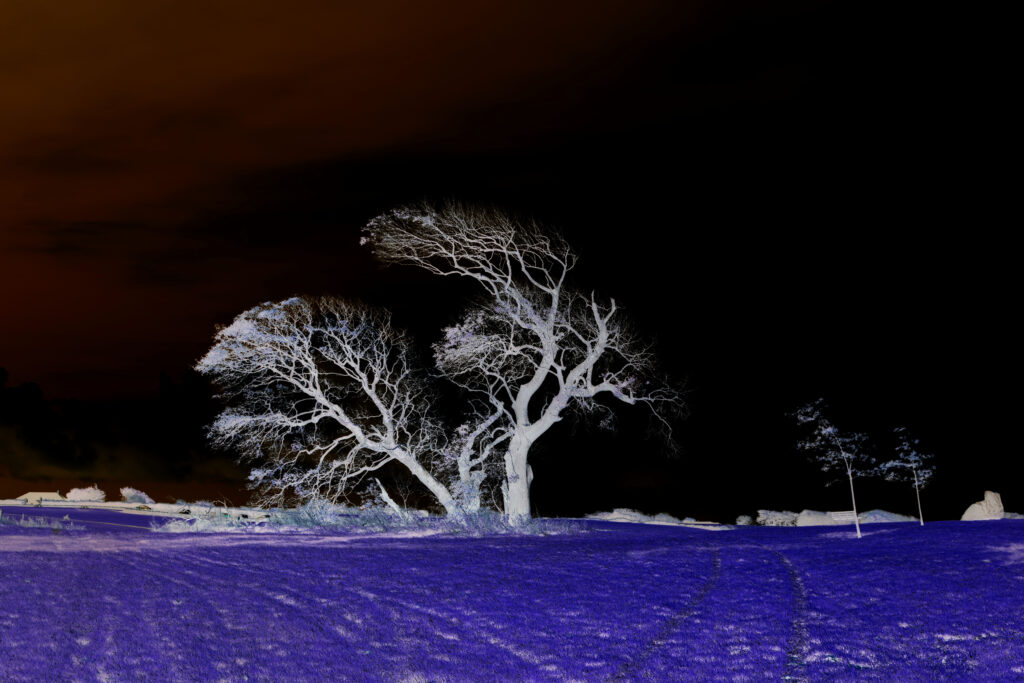
By taking a natural form and inverting it, I am actively using the photograph to shift from an object carrying a system to one carrying the notion of a system.
The Tree Branch as an Object Carrying a System
In its natural, original state, the tree branch is a physical node within a massive, living biological system. It handles the literal mechanics of life: transporting water and nutrients, supporting physical weight and managing photosynthesis, and operating within the tangible ecosystem of the forest.
The Inversion as Carrying the Notion of a System
The moment we apply a digital inversion filter, we strip the branch of its organic context and thrust it into a technical and symbolic framework. The image transforms into an abstraction. It no longer communicates “biology”—instead, it maps out the underlying digital grid or the logic of the matrix. The colours shift from organic browns and greens to artificial purples, whites, and deep reds. This visual language reminds the viewer that they are looking at binary data, RGB pixel values, and algorithmically processed information. The inversion exposes the technical agency of the camera sensor and the software. It breaks the illusion that photography simply mirrors reality, forcing the viewer to confront how the digital medium translates, encodes, and manipulates material objects into symbolic representations.
In General
That artistic intervention acts as a philosophical critique of material vs. digital agency. Inverting the image forces a breakdown in communication between what the object is in nature (a physical system) and what the object becomes on a screen (a concept or a simulacrum of a system). The image stops being a direct window into the world we know and becomes a blueprint, questioning how modern technology captures, processes, and redefines the natural world.