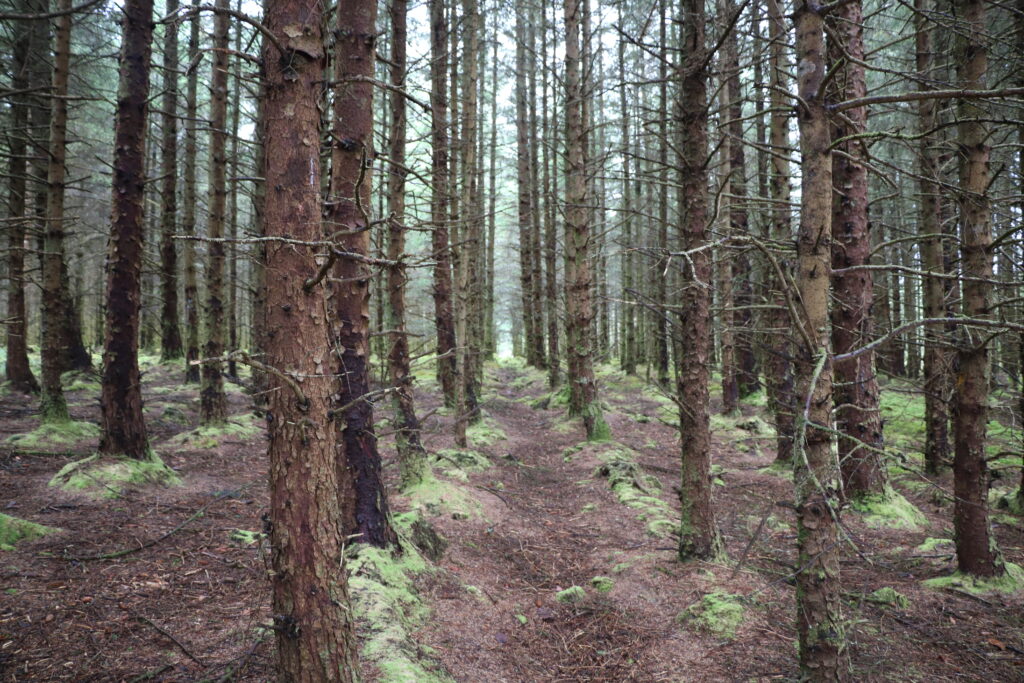
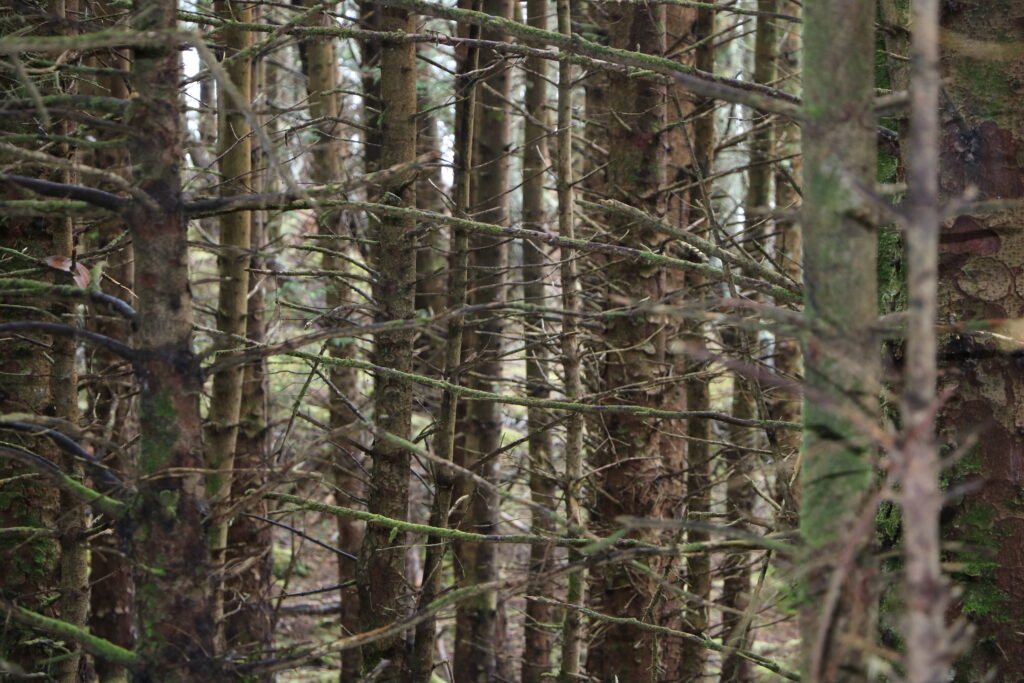
When we look at an industrial plantation—like the vast monocultures of non-native Sitka spruce or lodgepole pine planted across Connemara and the West of Ireland—we are no longer looking at “nature” in the traditional sense. We are looking at a human system forced onto the landscape.
The Monoculture: When Nature Was Forced into an Object Carrying a System
A natural, ancient Irish woodland is an autonomous, evolving ecosystem. However, the industrial forestry boom overseen by bodies like Coillte transformed trees into engineered units. In a Connemara plantation, wood is planted in strict, mathematically optimized rows. The trees are explicitly treated as an object carrying an industrial economic system—designed to maximise timber yield, sequester carbon on paper, and feed supply chains. To plant these non-native species, the complex, ancient physical system of the Irish blanket bog had to be artificially drained. The natural hydrological system of the peatland was systematically broken to make way for an artificial, commercial layout
The Collapse of the (Visual) Illusion
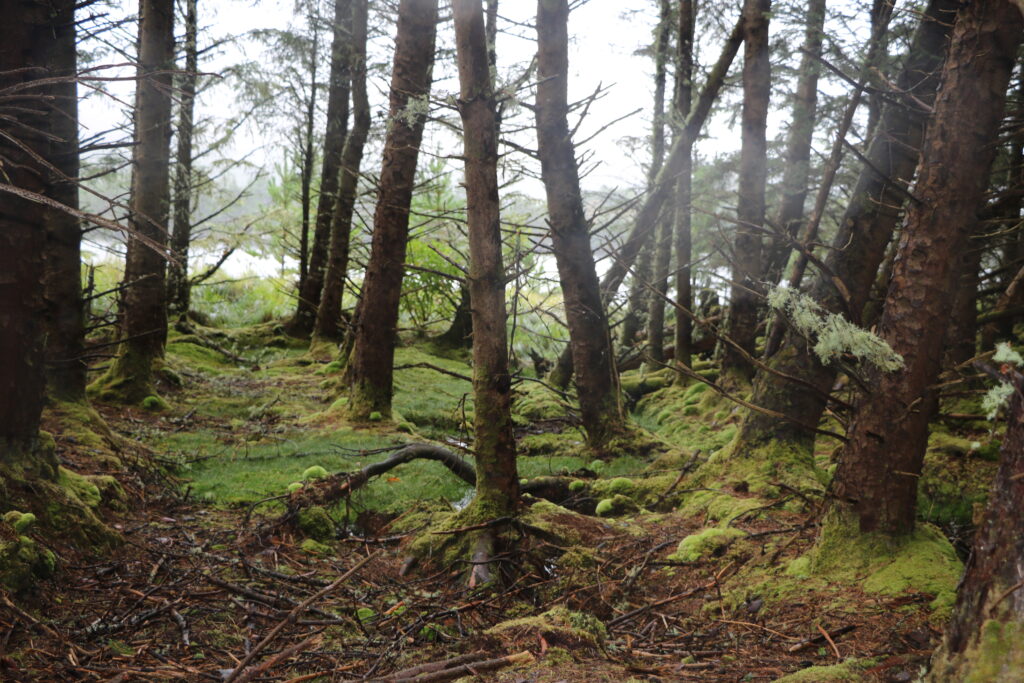
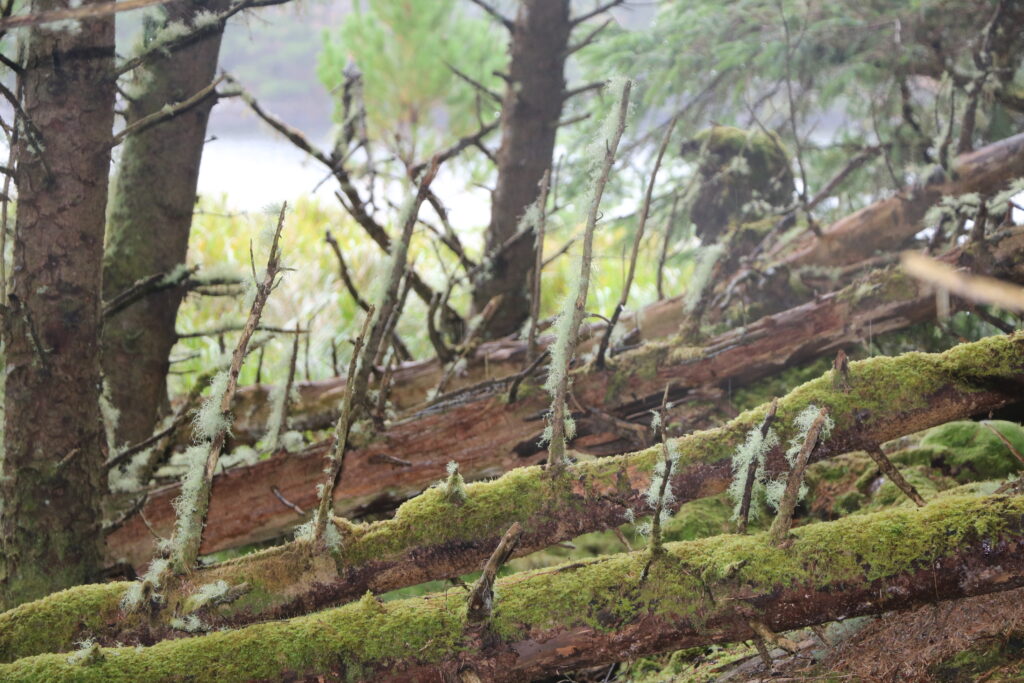
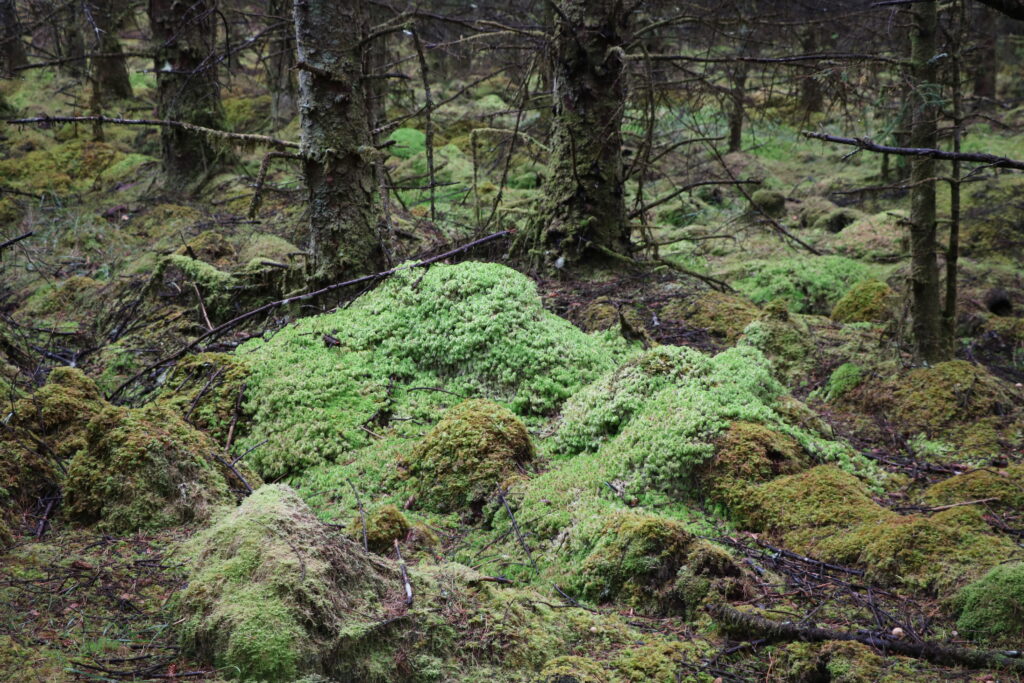
When a storm flattens an industrial forest, or a fire ravages it, the visual illusion of “nature” vanishes. The geometric grid of perfectly straight lines is shattered into chaotic, splintered geometry. The disaster unmasks the site, and it reveals that the forest was never a self-sustaining ecological system, but rather an unstable human idea imposed onto a landscape that rejected it. Today, conservation initiatives like the Wild Western Peatlands project in Connemara are actively felling these commercial plantations to rewet and restore the original blanket bogs. This shift marks the explicit retirement of a failing commercial layout, allowing a genuine, physical ecosystem to reclaim the land.